
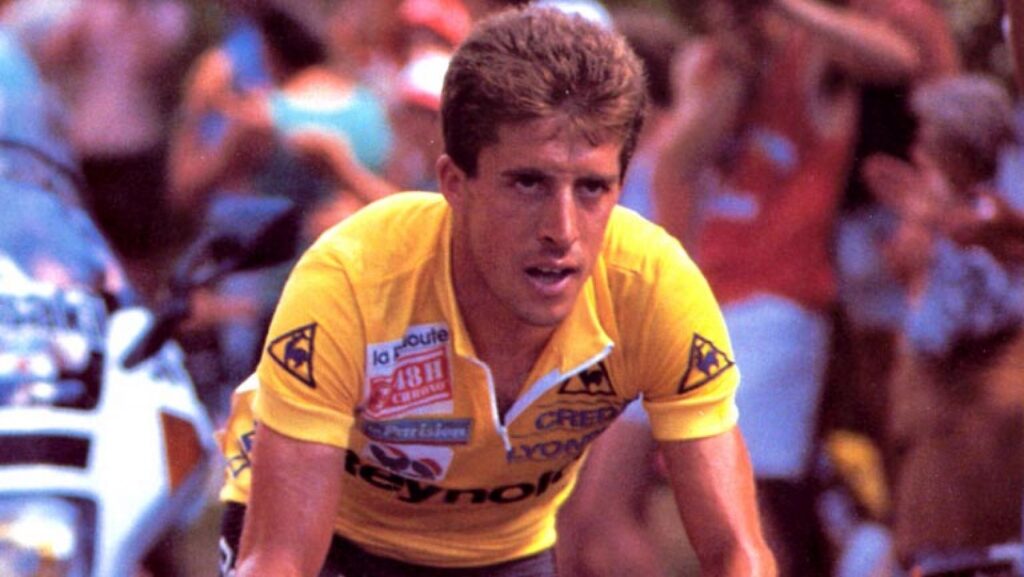
The International Cycling Critérium of La Nucía continues to consolidate itself as one of the most important sporting events on the Spanish cycling calendar. For its upcoming edition, the event keeps adding stars and legends of the sport and has already confirmed the presence of two historic figures of Spanish cycling: Pedro Delgado, winner of the 1988 Tour de France and two-time champion of the Vuelta a España, and Dori Ruano, world champion on the track and a trailblazer for women’s sport in Spain.
The participation of Delgado and Ruano marks a new leap in quality for the Critérium La Nucía, which will bring together legends, active riders, and thousands of fans for a weekend dedicated to cycling and family sport. Alongside the town’s Gran Fondo, it will take place on October 18 and 19.
The first ‘color’ Tour de France
An idol for an entire generation, Pedro Delgado became in 1988 the great ambassador of Spanish cycling and sport beyond national borders. Following the victories of Federico Martín Bahamontes in 1959 and Luis Ocaña in 1973, Perico claimed the first Tour de France title of the television color era and cemented the growth of Spanish cycling, which, embodied in his figure, had been building throughout the 1980s.
The rider from Segovia, who had already come close to glory in Paris in 1987 when he finished second and who had previously added the 1985 Vuelta to his palmarès, opened the way for a string of successes that only a few years later would be taken to unprecedented heights by Miguel Indurain—who will also be present at the La Nucía event and is responsible for designing the Gran Fondo course—with his five consecutive Tour victories (1991–1995). Later, Óscar Pereiro (2006), Alberto Contador (2007 and 2009), and Carlos Sastre (2008) would also follow in those footsteps.
A pioneer of women’s cycling
Alongside today’s commentator of major cycling events on Spanish Television, the Critérium Internacional de La Nucía will also feature Dori Ruano, one of the great promoters of women’s cycling in Spain and world champion in the points race at the World Championships in Bordeaux (1998), just one year after taking silver in Perth, Australia.
Ruano was the leading figure of Spanish women’s cycling at the turn of the century, a status forever sealed at the 2001 Road World Championships in Lisbon, where she claimed the bronze medal in the time trial—a specialty in which she was crowned Spanish champion seven times (in addition to two silver medals and one bronze).